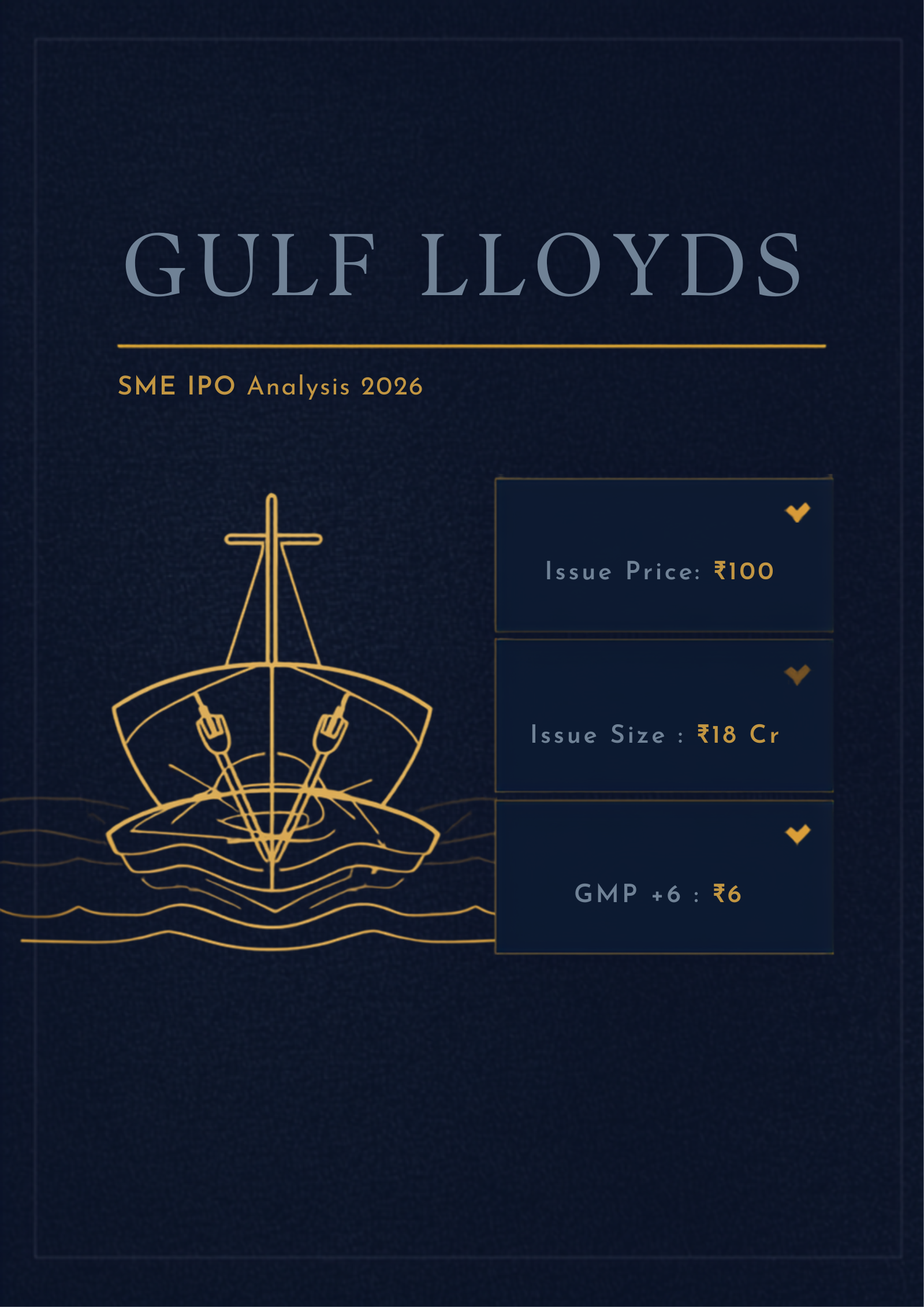
Gulf Lloyds (India) IPO: What This ₹18 Crore SME Issue Is Actually Selling
Gulf Lloyds (India) IPO opens July 20 at a fixed ₹100 a share. It's a decade-old inspection and certification business, not a flashy tech name, and the FY26 numbers are flatter than they look at first glance. Here's what's actually in the filing.
Gulf Lloyds (India) IPO: What This ₹18 Crore SME Issue Is Actually Selling
Gulf Lloyds (India) Limited inspects ships, audits factories, tests pipelines, and certifies compliance for clients in India, the US, the UAE, China and Germany. Now it wants ₹18.19 crore from the public markets. There's no app here, no consumer brand, nothing that trends on social media. It's a company whose entire job is making sure other companies are doing things correctly, and its own IPO deserves the same treatment: a plain, unromantic look at the numbers rather than a sales pitch.
Who Gulf Lloyds Is
The company started in Ahmedabad in 2014 and has spent over a decade doing third party inspection, auditing, testing, training and certification. If a factory needs to prove its equipment is safe, or cargo needs sign-off before it ships, or a power plant needs an independent audit, this is the kind of firm that does the checking and puts its name on the paperwork.
Its client list includes Ratnamani Metals & Tubes, John Energy, Corrtech International and RPF Pipes, among others in India's industrial mid-market. This is a relationship business. Once a client trusts your inspectors and your documentation, they tend to stay, because switching an auditor mid-relationship is its own kind of hassle.
The company employed 715 people as of May 2026 and had an order pipeline worth ₹58.44 crore at that point. That's not a huge number, but for a business this size it gives some visibility into near term revenue.
The Issue, Plainly
The mechanics of the offer:
Issue type: Fixed price, not book built. ₹100 per share.
Issue size: ₹18.19 crore, entirely a fresh issue. No promoter is selling out, which is worth noting on its own.
Lot size: 1,200 shares, minimum 2 lots (2,400 shares), so a retail investor needs ₹2,40,000 to apply.
Dates: Opens July 20, 2026, closes July 22, lists on BSE SME around July 27.
Registrar: KFin Technologies.
Lead manager: Interactive Financial Services Ltd.
That ₹2.4 lakh minimum matters more than it looks. Fixed price SME issues with a 2-lot floor aren't built for casual participation. You need to actually mean it to apply here.
Three Years of Numbers, Read Slowly
Period | Total Income | PAT | EBITDA | Net Worth |
|---|---|---|---|---|
FY2024 | ₹23.51 Cr | ₹1.68 Cr | ₹2.97 Cr | ₹4.66 Cr |
FY2025 | ₹35.88 Cr | ₹4.67 Cr | ₹7.66 Cr | ₹9.33 Cr |
FY2026 | ₹35.97 Cr | ₹4.30 Cr | ₹7.90 Cr | ₹13.48 Cr |
Revenue grew 53% from FY24 to FY25. That's a real jump. Then FY25 to FY26, income barely moved, ₹35.88 crore to ₹35.97 crore, and profit actually fell a little, from ₹4.67 crore to ₹4.30 crore. A single flat year doesn't sink a company. But it does mean the growth story isn't a clean upward line, and anyone applying purely on the FY25 jump is reading half the chart.
What's quietly working in the company's favor: net worth nearly tripled in two years, EBITDA margins have stayed in the low twenties as a percentage of income, and the balance sheet is being reinforced rather than run harder. Borrowings sit at ₹15.68 crore, and part of the IPO money is going straight at that.
The Ratios, With the Caveats Attached
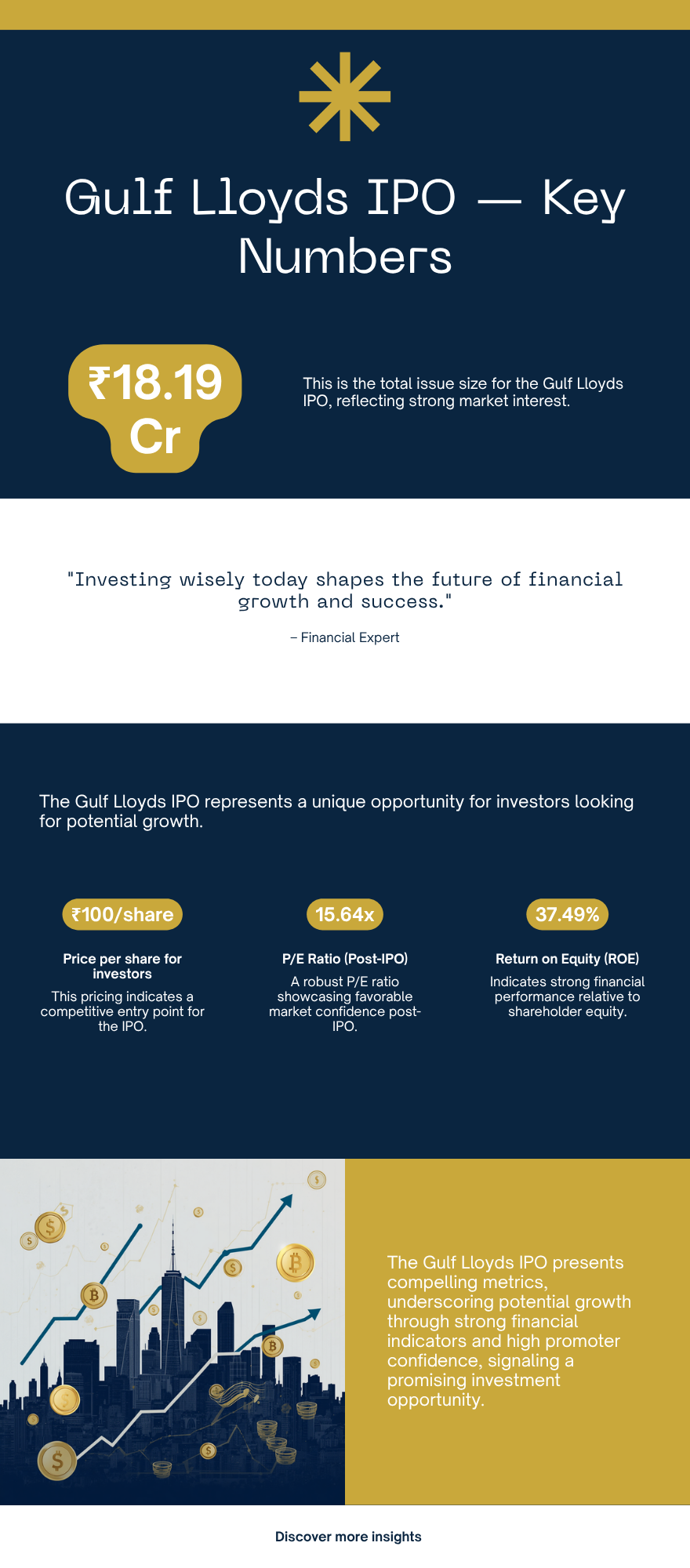
Return on equity of 37.49% and return on capital employed of 24.88% are strong on paper. But they're measured against a small pre-IPO equity base, and once the new shares come in, that base grows and these percentages will come down. That's not a knock on the business, just how the math works after any capital raise.
Debt to equity of 1.15 runs a bit high for a services company, which is usually a lighter-asset model than this ratio suggests. That's likely why ₹3 crore of the raise is going toward repaying unsecured loans. The remaining money splits between office capital expenditure (₹4.01 crore), working capital (₹7.15 crore) and general corporate purposes.
Post issue P/E works out to about 15.64x, up from a pre-IPO 11.41x. That gap is the standard cost of going public: the same earnings now spread across more shares. Whether 15.64x counts as reasonable depends on what you think happens after this flat FY26 year, and that's genuinely a harder call than the ROE number alone would suggest.
What the Grey Market Is Saying
GMP has been sitting around ₹6, which works out to roughly a 6% expected listing gain. That's a modest number. It's nowhere near the kind of premium that signals a rush of applications, but it isn't zero or negative either, which would point to expected listing losses. A single digit percentage like this usually reads as mild, cautious optimism rather than excitement.
GMP is unofficial and thinly traded. It shifts by the day and it has been wrong before, in both directions. Treat it as one input, not the final word.
The Risks Worth Sitting With
Analyst Dilip Davda reviewed the issue and rated it Avoid, pointing to average growth with a stagnant top line in the reported periods, a small post-IPO equity base that suggests a longer runway before the stock re-rates, and a merchant banker with an inconsistent track record on past issues. His view: only well-informed, risk-tolerant investors should park moderate money here for the medium term.
Beyond that review, a few things are worth naming directly. There's no QIB category in this issue, so there's no institutional due diligence layer sitting underneath retail demand. The post-listing float is small, which usually means bigger price swings in both directions and thinner daily volumes. And SME board stocks generally trade less liquidly than mainboard names, so getting in or out at your intended price isn't always straightforward.
Where That Leaves an Applicant
If you want a business with a decade of real operating history, actual profits, and exposure to a sector, inspection and certification, that only becomes more relevant as regulatory standards tighten across Indian manufacturing, there's a legitimate case here. This kind of business runs on repeat contracts across many clients rather than one big customer or one product line, which lowers a certain kind of risk even if it doesn't remove others.
If you're hoping for a quick listing day gain, the single digit GMP and fixed price structure don't point that way. And if the lack of QIB backing or the lead manager's history bothers you, that's a reasonable enough reason to skip this one, or to apply only with money you can leave alone for a while rather than money you plan to pull out in week one.
It's a moderate conviction, medium term bet on a business that does unglamorous, necessary work. That's not automatically a bad trade. It's also not a safe one just because it sounds boring. Read the FY26 numbers again before you decide, and don't put in more than you'd be fine holding through a quiet, unspectacular listing.
This article is for informational purposes only and does not constitute investment advice. IPO investments carry market risk, including the risk of capital loss. Please read the offer documents carefully and consult a registered financial advisor before applying.
Comments
No comments yet
Be the first to share your thoughts!